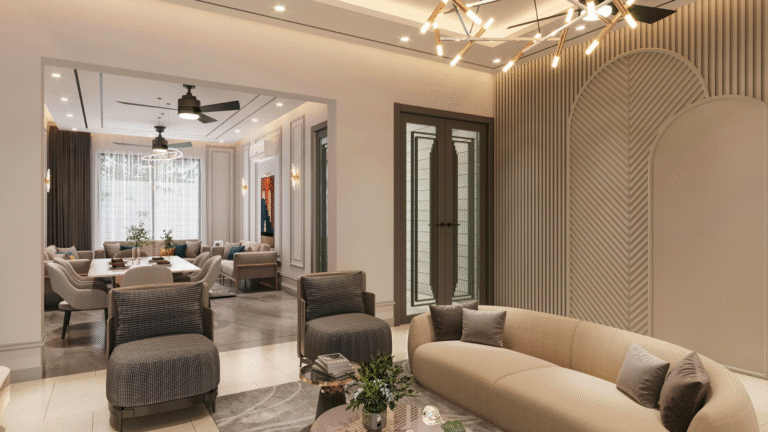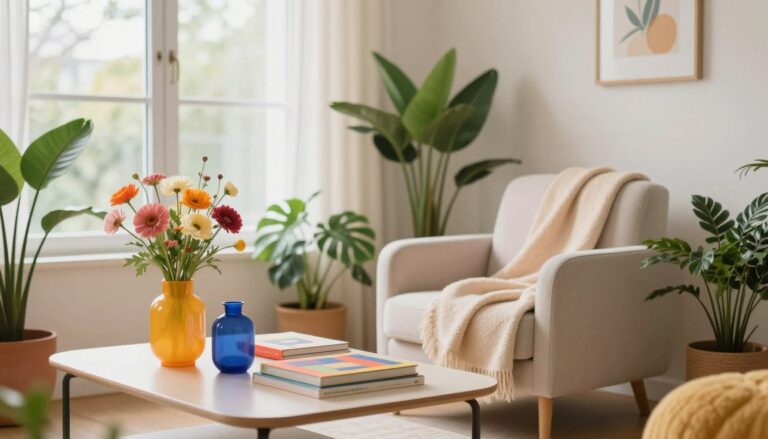
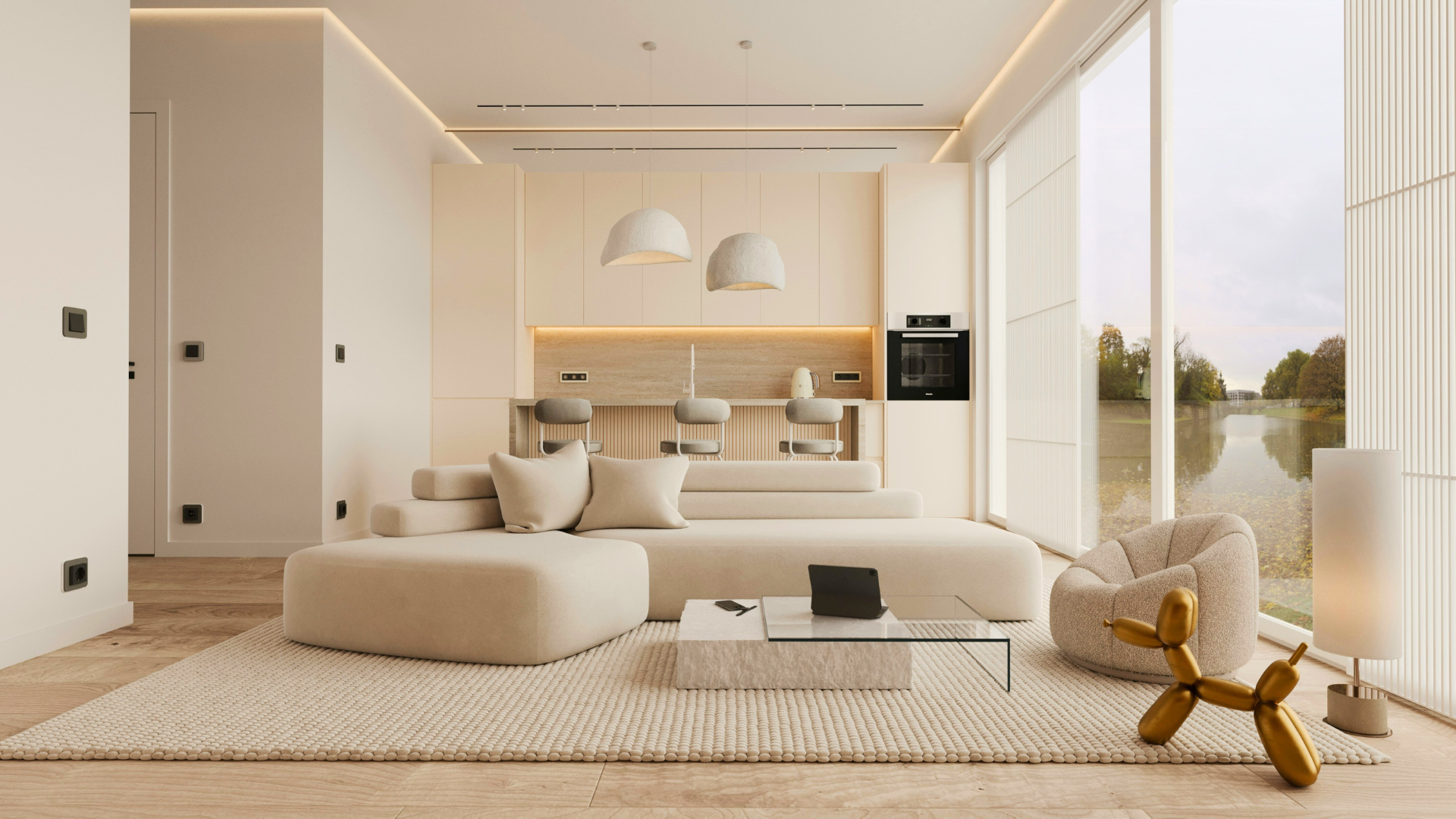
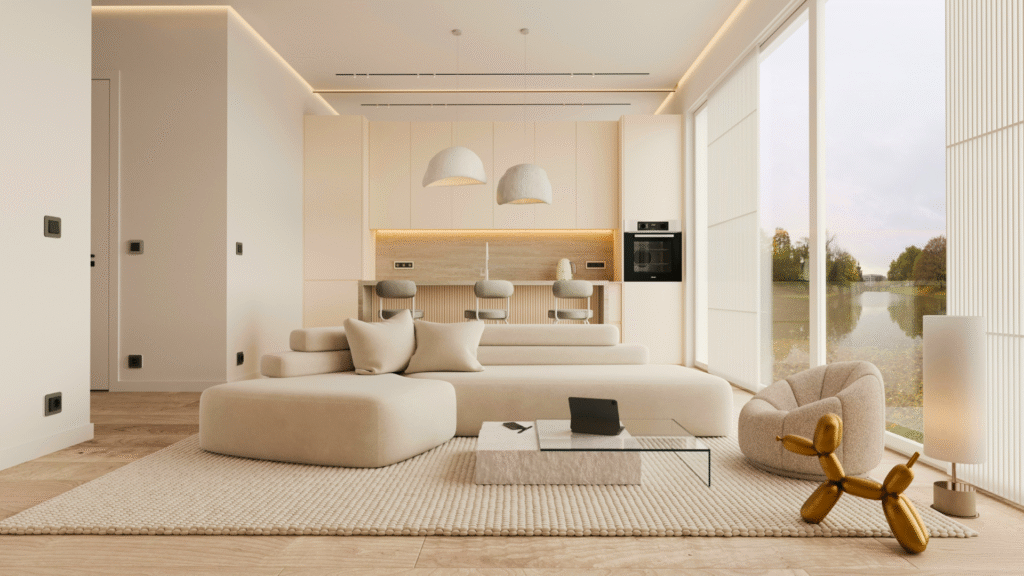
Textured luxury decor is the missing ingredient for anyone who feels their minimalist home decor has become cold, echoing, and uninviting. You’ve cleared the clutter and stripped back the walls, but instead of achieving a high-end, quiet luxury interior, you’re left wondering why minimalism feels boring at home. There is a thin, painful line between “intentional” and “empty,” and for many, current minimalist design trends have crossed into a territory where minimalism makes a space feel unfinished.
The truth is, luxury isn’t found in the absence of things—it’s found in the soul of the things that remain.
If your minimalist style living room feels sterile rather than sophisticated, you aren’t alone. The “clinical” look of 2020 is being replaced by luxury interior trends that prioritize feeling over flicking through a catalog. We are seeing a massive shift toward home design textured luxury, a movement that moves away from flat-pack surfaces and toward layered materials for interior depth. Whether you are looking for minimalist furniture ideas that actually have character or wondering about the difference between minimalist and luxury design, the answer lies in “Warmth.”
In this guide, we’re going to look at how to make minimalism feel luxurious by breaking the “all-white” rules. From Japandi style home decor and the cozy, layered comfort of cozymaxxing for home, to the unexpected charm of vintage decor trends and chateaucore home style, we will explore how to fix the “flatness.” You don’t need to pivot into an eclectic decor or a maximalist home to find beauty; you simply need to master the textured luxury home design rules.
It’s time to move beyond the “bare” and discover how to add texture to home decor to create elevated minimalist interiors with natural texture. Here are the luxury minimalist decor ideas for 2026 that will help you add warmth and depth to minimalist rooms, turning a “cheap” space into a high-performance sanctuary.
When you decide to “go minimalist,” the goal is usually a home that feels like a boutique hotel: calm, curated, and expensive. However, many people fall into the trap of minimalist design mistakes that unintentionally signal “budget” rather than “luxury.” If your space feels like a hollow shell of white walls and flat surfaces, you’ve likely hit the minimalist home design plateau where the soul of the room has been decluttered away.
This transition toward warmth is a natural evolution for those who have already embraced dark organic modern decor to create a moody sanctuary
Why Your Current Minimalism Lacks Textured Luxury Decor
Here is why your minimalism might be feeling more “cheap” than “chic,” and why failing to incorporate textured luxury decor is the biggest mistake homeowners make in 2026.
The “Grey-Scale Trap”: Why Neutral Doesn’t Mean Flat
One of the most common reasons why minimalism feels boring at home is the over-reliance on a “True Grey” or “Stark White” palette. In professional luxury minimalist design ideas, designers never use just one shade of white; they rely on textured luxury decor to provide depth.
- The Mistake: Painting walls, ceilings, and trim in the same flat, cool-toned white. Without the variation found in textured luxury decor, this lack of tonal variety sucks the “Visual Weight” out of the room, making it look two-dimensional.
- The Luxury Fix: Move toward warm minimalist interior textures. Instead of cool grey, look for “Living Neutrals”—shades of bone, mushroom, and warm taupe. Layering these tones is the secret to how to make minimalism feel luxurious and creating the “Expensive Glow” found in quiet luxury interiors.
The Absence of “Patina” and History
Luxury is defined by authenticity. When every item in a room is a mass-produced piece of minimalist furniture, the space lacks a “temporal narrative.” Without the depth provided by textured luxury decor, a home feels like a showroom rather than a sanctuary.
- The “Cheap” Signal: Overusing synthetic materials like acrylic or high-gloss laminates. These materials don’t age; they simply degrade, which is why minimalism feels boring at home.
- The Patina Principle: Real luxury minimalist decor ideas rely on “Living Materials”—like unlacquered brass, honed travertine, and open-grain walnut. These natural textures develop a patina over time, creating the layered materials for interior depth that modern designers crave.
- The Soul Anchor: Incorporating vintage decor trends or a storied antique into a minimalist style living room provides a “Soul Anchor.” This contrast between old and new is the hallmark of elevated minimalist interiors with natural texture.
The “Clinical” vs. “Tactile” Divide
If a room is visually empty and tactilely smooth, the human brain registers it as “cold.” This is where minimalist home decor often fails. To achieve elevated minimalist interiors with natural texture, you must replace “smoothness” with “tactile interest.”
- Layered Materials for Interior Depth: In 2026, we are seeing the rise of textured walls and ceilings. Think lime-wash finishes, plaster, or even subtle micro-cement. These finishes catch the light and create microscopic shadows, providing interior depth that a flat coat of paint never could.
- Minimalist vs. Luxury Home Decor: The difference is often in the “Hand-Feel.” A luxury minimalist space uses layered materials—a heavy linen drape against a cold plaster wall, or a chunky wool rug over a smooth oak floor.
The “Amazon Effect” in Minimalist Spaces
In an effort to keep things “simple,” many homeowners buy matching sets of minimalist furniture ideas from big-box retailers. This creates a “Cookie-Cutter” aesthetic that is the opposite of textured luxury home design.
- The Fix: Embrace a touch of eclectic decor or Japandi style home decor by mixing eras and origins. A sleek, modern sofa paired with a vintage hand-carved wooden stool immediately elevates the space. This “Collected, Not Bought” look is the key to how to make minimalism feel luxurious.
“Rule #1.” I have front-loaded the keywords and ensured the “Synthetic vs. Natural” section is dripping with SEO value.
Rule #1: The Material Hierarchy in Textured Luxury Decor
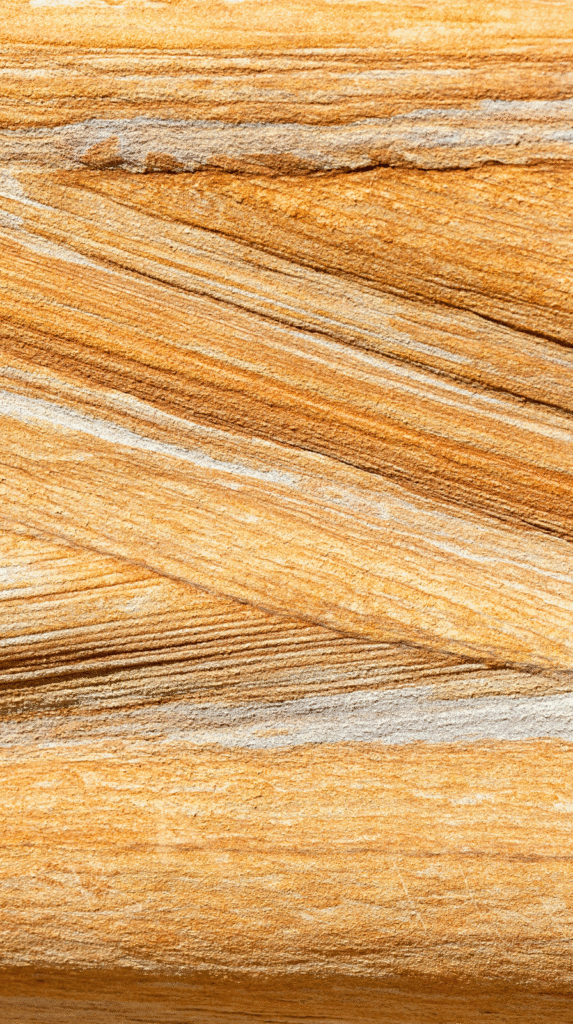
To transition from a space that feels “empty” to one that feels “expensive,” you must understand the material hierarchy of textured luxury decor. In luxury minimalist design ideas, the materials are the stars of the show. When you have fewer items in a room, the quality of those items is magnified. If you want to know how to add texture to home decor, you must start by auditing the “honesty” of your materials and prioritizing natural textures.
Natural vs. Synthetic: The “Honesty” Test
The quickest way to make a minimalist home decor scheme feel “cheap” is to use materials pretending to be something else. To master home design textured luxury, you must move away from the “plastic” look of standard minimalism.
- The Synthetic Trap: Faux-leather that peels, wood-look laminate with a repetitive grain, and plastic “marble” countertops. These materials lack the “heft” and thermal properties required for elevated minimalist interiors with natural texture.
- The Luxury Standard: Textured luxury home design relies on “Honest Materials.” A solid stone plinth coffee table or a 100% organic linen curtain provides the layered materials for interior depth that polyester can never replicate. In 2026 luxury interior trends, the focus is squarely on tactile, raw materials like travertine, wool, and raw timber.
The Art of Mixing Wood Grains
A common minimalist home design mistake is trying to match every wood surface perfectly. This results in a “flat,” showroom look.
- Layered Materials for Interior Depth: To create interior depth, you should mix your wood tones. Pair a light, sanded oak floor with a dark walnut side table. The contrast between the grains creates a visual “conversation” that feels curated over time.
- Pro Tip: Keep the undertone consistent. If your floor has a warm, yellow undertone, ensure your darker wood accents also lean warm (like cherry or walnut) rather than cool (like grey-stained ash). This is a staple of Japandi style home decor.
Incorporating Stone and Clay
If your minimalist style living room feels too “light,” you need to ground it with Earthy Modern elements.
- Texture over Color: Instead of adding a “pop of color,” add a “pop of texture.” A hand-thrown clay vase with a rough, sandy finish or a honed limestone bowl provides warm minimalist interior textures without breaking your neutral palette.
- How to give minimal spaces more texture and luxury: Replace a standard drywall feature with a textured wall made of Roman Clay or Lime-wash. These finishes provide a soft, sueded look that makes the walls feel “thick” and expensive rather than thin and hollow.
Rule #2: Tonal Layering (Creating “Visual Weight”)
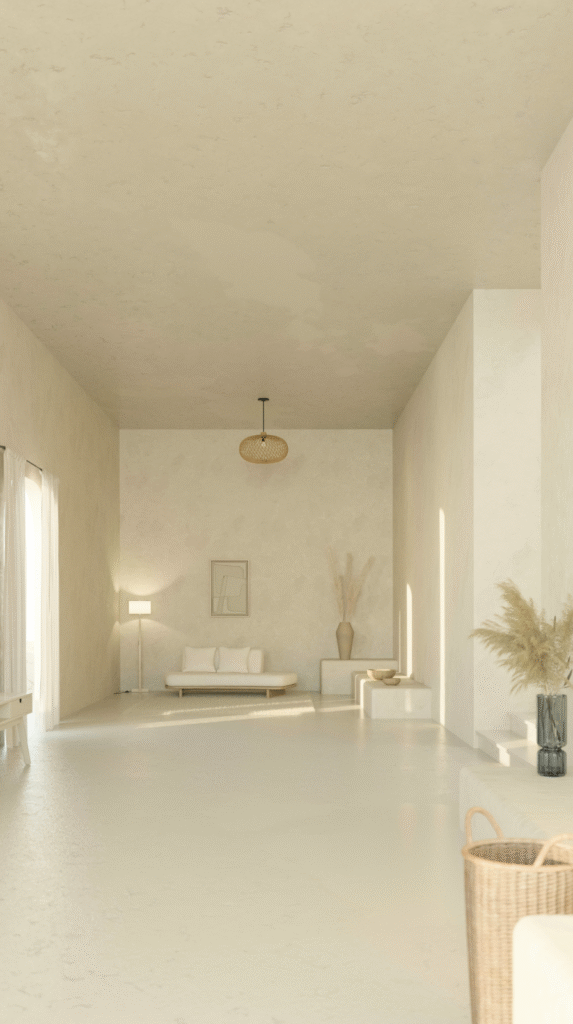
If “Minimalism” is the art of subtraction, “Textured Luxury” is the art of layering. To avoid the why minimalism feels boring at home slump, you must move from a monotone palette (everything is the same shade) to a monochromatic palette (one color, many shades and textures).
Moving Beyond “Stark White”
The most luxurious quiet luxury interiors are almost never pure white ($#FFFFFF$). They use “The New Neutrals.”
- The Palette: Use shades like Bone, Sand, Taupe, and Greige.
- The Goal: You want the room to feel like it’s wrapped in a cashmere blanket. By using a “Bone” colored bouclé chair against a “Sand” lime-wash wall, you create add warmth and depth to minimalist rooms through subtle shifts in light and shadow.
The 60-30-10 Texture Rule
To balance your luxury minimalist decor ideas for 2026, apply this ratio to your materials rather than just your colors:
- 60% Base Texture: Your largest surfaces (walls and floors). Use matte, slightly porous finishes like wood or plaster.
- 30% Secondary Material: Your furniture. Use tactile fabrics like linen, soft leather, or velvet.
- 10% High-Contrast Accent: Your “jewelry.” Use high-shine or high-roughness items like a polished brass lamp, a rough stone sculpture, or a vintage decor piece.
Rule #3: The “Imperfection” Principle (Wabi-Sabi Luxury)
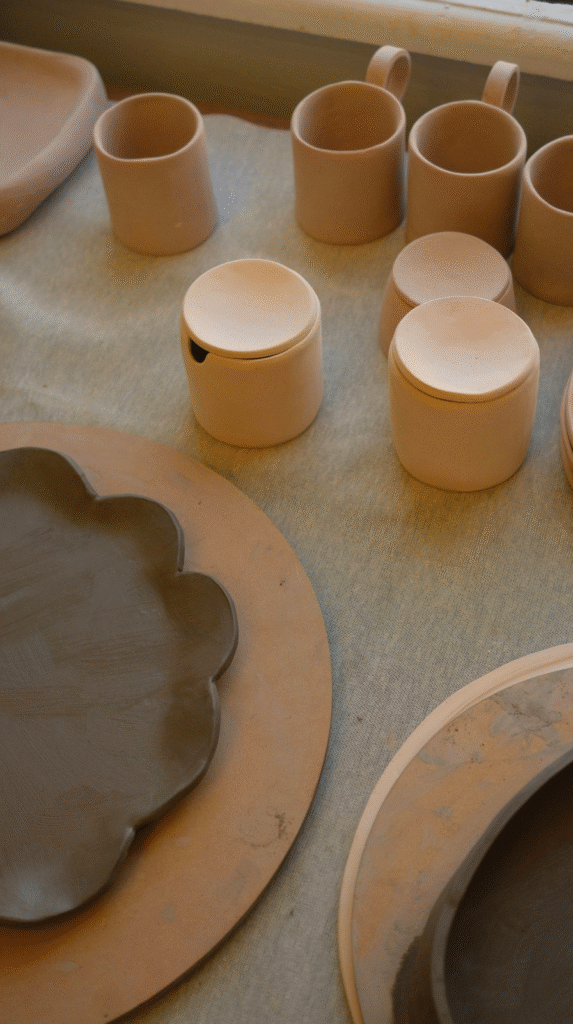
The final secret to how to make minimalism feel luxurious is embracing the “Human Touch.” In the world of minimalist design trends, there is a pivot away from machine-made perfection toward “living” materials. This is where minimalist home decor meets the philosophy of Wabi-Sabi—finding beauty in the aged, the handmade, and the organic.
The “Human Touch” vs. The Factory Finish
A home feels “cheap” when every surface looks like it came off a conveyor belt. To achieve elevated minimalist interiors with natural texture, you need pieces that show the hand of the maker.
- Hand-Knotted vs. Machine-Made: A machine-made rug is perfectly symmetrical but visually “dead.” A hand-knotted wool rug has slight variations in weave that capture light differently, providing interior depth.
- Artisanal Ceramics: Instead of a set of six identical glass vases, choose one hand-thrown ceramic vessel with a rough, sandy glaze. This single “imperfect” object creates a focal point that screams quiet luxury interiors.
Raw Edges and Living Finishes
To add warmth and depth to minimalist rooms, look for materials that “breathe.”
- Living Finishes: Use unlacquered brass or copper for hardware. These metals will darken and develop a unique patina over time, moving away from the “sterile hotel” look and toward chateaucore home style or vintage decor trends.
- Honed vs. Polished: Skip the high-gloss “liquid” look for stone. A honed or leathered finish on marble or travertine feels soft, matte, and incredibly high-end. It invites you to touch it, which is the ultimate goal of home design textured luxury.
FAQ: Mastering the Transition to Textured Luxury
How do I make my home look expensive on a budget? You don’t need a full renovation to escape the “cheap” minimalist look. Focus on “The Big Three”:
- Swap your hardware: Replace basic kitchen pulls with heavy, textured metal.
- Upsize your rugs: A small rug makes a room look cheap. Go larger than you think, and choose a natural fiber like jute or wool.
- Lampscaping: Replace cool-white bulbs with warm (2700K) bulbs to highlight your warm minimalist interior textures.
Is minimalism out of style for 2026? No, but “Cold Minimalism” is dead. The 2026 trend is Warm Minimalism or Japandi style home decor. It’s about being an editor, not just a subtractor. You keep the clean lines but replace the “white box” feel with layered materials.
How many textures are too many? The rule of thumb is “The Common Thread.” You can have five different textures (linen, wood, stone, wool, and metal) as long as they stay within a similar tonal family (e.g., all warm neutrals). This prevents the space from becoming an eclectic decor or maximalist home mess while still providing luxury minimalist decor ideas.
Conclusion: From Showroom to Sanctuary
The difference between minimalist and luxury design isn’t about the price tag—it’s about the sensory experience. If you’ve felt that your minimalist home design has been lacking “soul,” it’s likely because you’ve focused too much on what to take away and not enough on what to layer back in.
By following the textured luxury home design rules—prioritizing the material hierarchy, mastering tonal layering, and embracing imperfection—you can transform a sterile space into a high-performance sanctuary. Whether you’re leaning into cozymaxxing for home or the sophisticated restraint of quiet luxury, remember that texture is the language of comfort. Stop settling for “flat” and start designing for “depth.”